A chemical clue to a planet that may still be active.
European scientists reported local summer spikes of hydrogen chloride near fresh-looking fissures. A magmatic release is plausible — but the orbiter did not see lava, an eruption or life.
OBSERVEDLocalized HCl increases
INTERPRETEDPossible dormant magma
NOT PROVENEruption, hydrothermal habitat or life
The exciting conclusion is not “life found”. It is that modern Mars may be more chemically and geologically dynamic than a dead-world picture suggests.
TEN OFFICIAL MISSION FILES
One planet. Ten clues. No invented verdict.
Each file links to the NASA or ESA material behind the summary. Open the source when a claim matters.
01 · VOLCANIC SIGNAL
Chlorine gas near Alba Mons
ExoMars Trace Gas Orbiter measured local, seasonal hydrogen chloride increases near young-looking fissures. Dormant magma is one candidate explanation; an eruption was not observed.
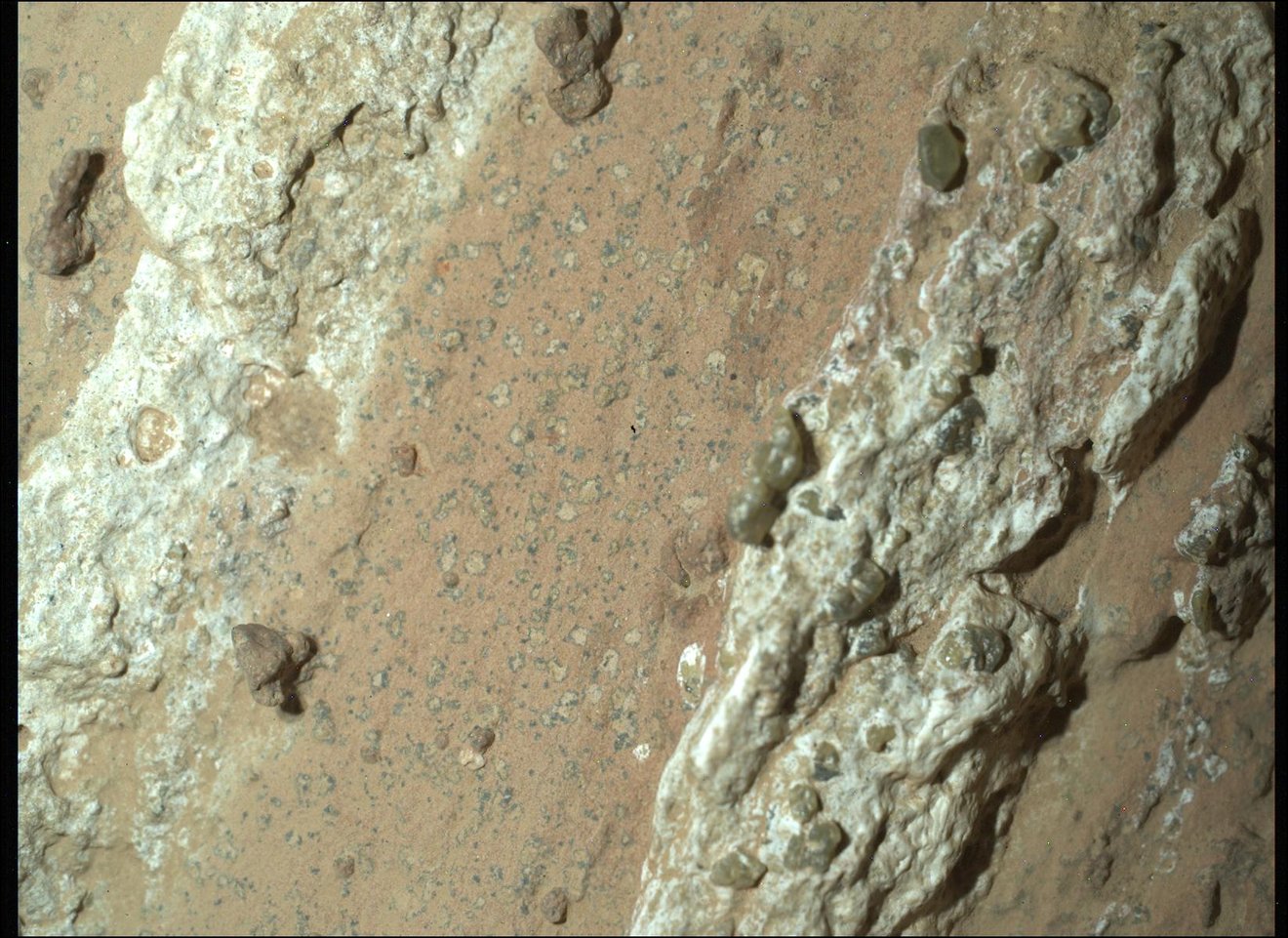
Perseverance found minerals, organics and reaction textures in Cheyava Falls. NASA calls the combination a potential biosignature because non-biological explanations are still possible.
Orbital neutron data revealed an unusually hydrogen-rich area. Water ice is a strong interpretation, but the instrument measures hydrogen rather than photographing an underground lake.
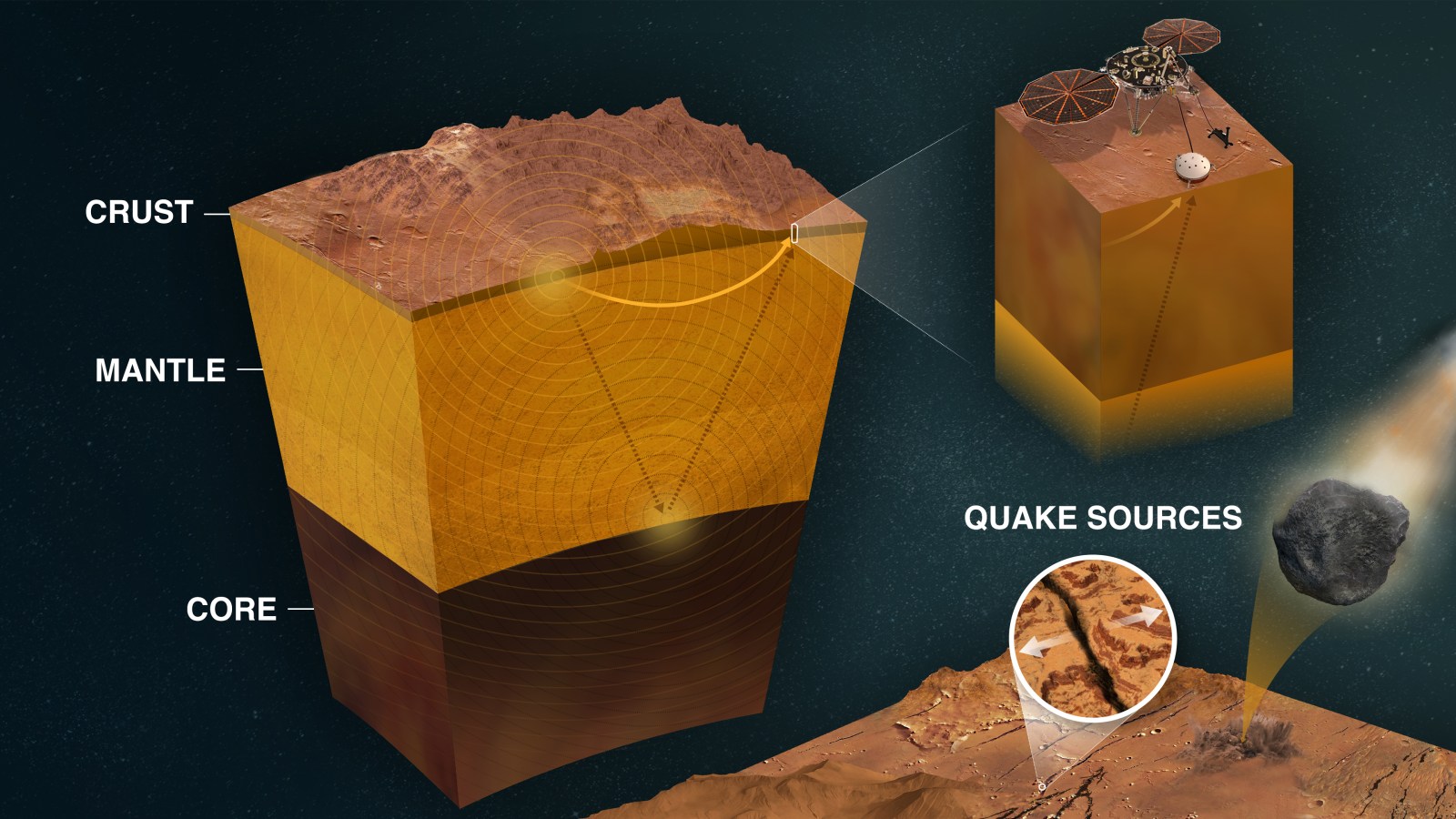
InSight detected marsquakes and mapped the crust, mantle and core. The planet is not geologically silent, although seismic activity alone does not demonstrate active volcanism.
Curiosity has measured methane at Gale crater while orbiters often do not. Rock-water chemistry, release from underground reservoirs and biology remain among the ideas under investigation.
Mars once supported rivers and lakes. Atmospheric escape and carbon locked into the crust help explain why stable surface water disappeared, but the balance is still being refined.
Trace Gas Orbiter observations connected hydrogen chloride chemistry with the seasonal water cycle and dust activity, adding another route for studying atmospheric change.
Mars Reconnaissance Orbiter has built a long, high-resolution record of the surface. Repeat observations let researchers distinguish fresh changes from ancient landforms.
Trace Gas Orbiter maps atmospheric gases with high sensitivity, while rovers analyse particular rocks and landers listen below the surface. No single instrument can settle the life question.
Read Mars as evidence, not as a collection of trivia.
These original briefings combine mission data, peer-reviewed research and clearly labelled interpretation. They are written for Kodmart; the linked records remain the authority when precision matters.
01
A PLANET OF ARCHIVES
Mars preserves ancient environments while modern processes keep rewriting the surface.
Rovers read individual rocks, orbiters map regions and landers listen below ground. Their scales must be joined carefully.
River valleys, lake sediments and water-altered minerals show that early Mars hosted environments very different from the cold, thin-atmosphere world seen today. A rover can examine texture and chemistry at one outcrop, while an orbiter supplies regional context and repeat imaging. Neither scale can safely stand in for the other.
Modern Mars is active through dust, frost, slope change, atmospheric escape and marsquakes. Chemical signals such as methane or hydrogen chloride are valuable because they may connect the surface, atmosphere and subsurface, but source attribution remains difficult. Detection of a molecule is the start of a causal investigation, not its conclusion.
Ancient habitability is not the same claim as present life.
A molecule can have biological and non-biological sources.
Repeat measurements are essential when signals vary by place and season.
A potential biosignature is a disciplined invitation to eliminate alternatives.
Interesting chemistry earns more investigation; it does not earn a shortcut to a biological verdict.
Perseverance found a combination of organics, minerals and reaction textures in the Cheyava Falls rock. On Earth, comparable features can be associated with microbial processes, but non-biological reactions can also build complex patterns. The correct status is therefore a potential biosignature with stated alternatives.
The most powerful next test may require measurements that a rover cannot perform in place. Sample context, contamination control, multiple laboratory techniques and independent teams can distinguish explanations more rigorously. Until then, excitement and restraint are not opposites: restraint is what preserves the value of the discovery.
Organic molecules are not organisms.
Context and contamination control are part of the evidence.
The claim must remain no stronger than the instrument and sample allow.
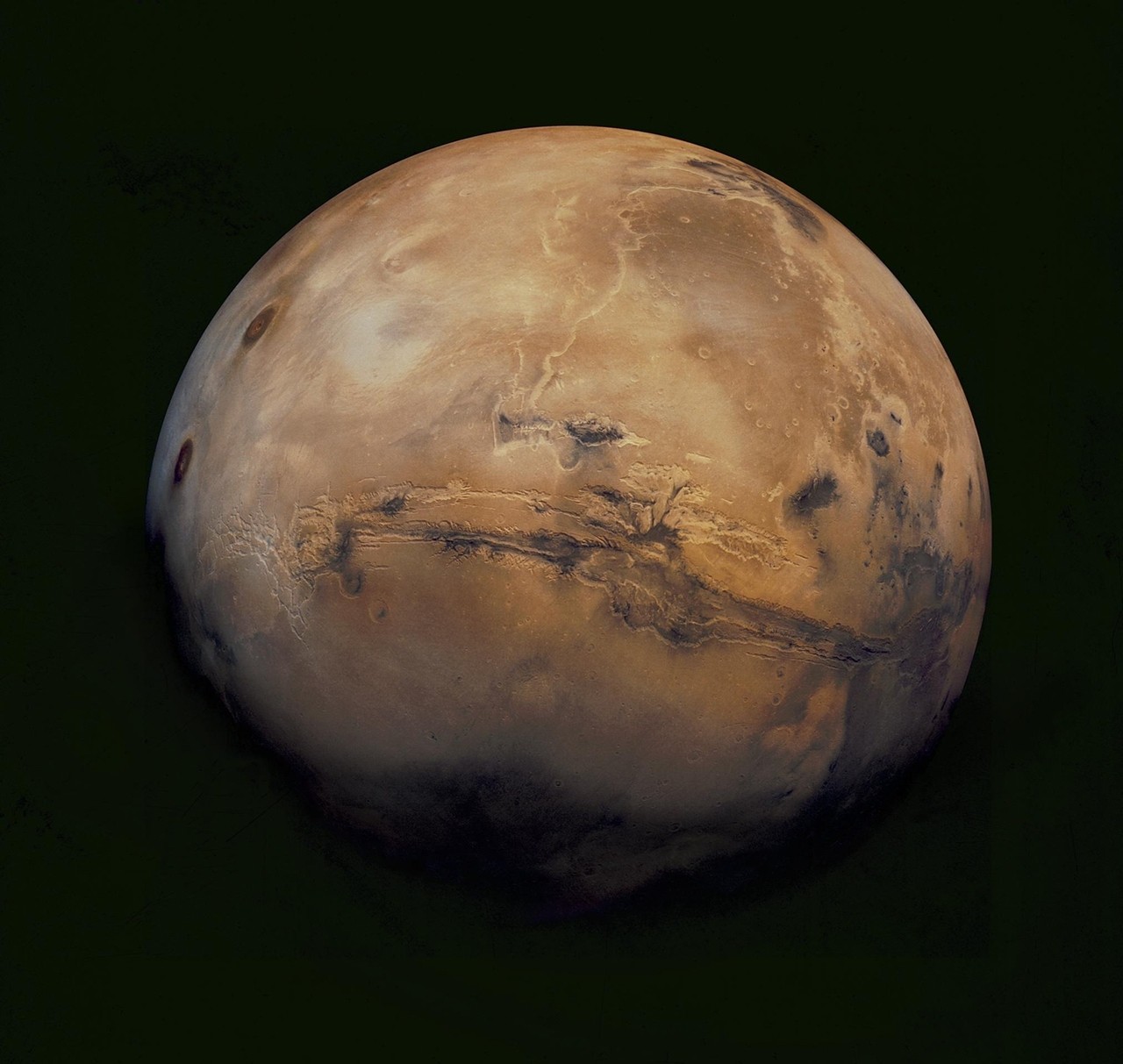
Global Mars view · NASA/JPL/USGS · PIA04304 · real mission imagery, presented with its source attachedCheyava Falls rock detail · NASA/JPL-Caltech/MSSS · PIA26368
CASE FILE · CHEYAVA FALLS
The most interesting answer is still “investigate”.
The rock contains organic compounds, iron-phosphate minerals and spotted reaction textures. On Earth, combinations like these can be associated with microbial activity. They can also arise through non-biological chemistry.
Potential biosignature means a feature that might have a biological origin and needs more data before any conclusion.